| | The Anthropocene Laboratory Newsletter |
| | | |
|
|
| Spring is just around the corner
Since the last newsletter, we have been recruiting several new colleagues. We now have a full team of research assistants, post docs, researchers, a coordinator, director, and an artist in residence, together filling up our floor at the academy. We have published a short text on the Anthropocene for Swedish high school students, co-organised an international symposium on the Anthropocene, and published a second annual report. We have edited a first academic article in the experimental series “Testing I, II” in the journal Ambio, and have submitted several scientific papers to academic journals.
We have hosted two international scientific workshops (Anthropocene Diplomacy, and: Invisible and Silent Biosphere Communication) and are preparing for a third workshop in the coming month (Healing trauma in the Anthropocene). Our collaborative approach is starting to generate results, and we have attempted to capture some of these results in our annual report, and in a short text describing our interactions with artists. I hope you enjoy this short update – and that you also take the time to have a look at our recent annual report for a more in depth look at our work. |
|
|
| | Invisible and silent biosphere communication | | 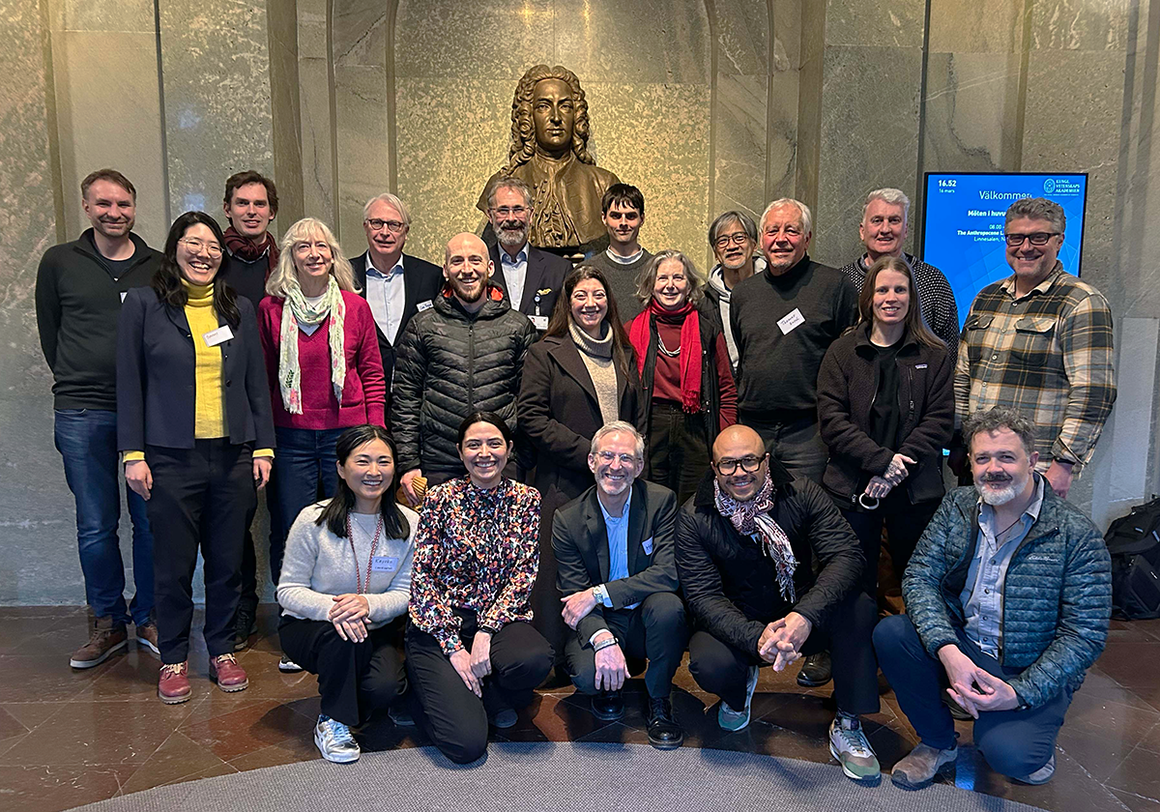 | | Have you ever wondered how we communicate with our environment? How do microbial activity and biochemical reactions interact to help us connect with and experience our world in the Anthropocene?
In March, we brought together researchers from a uniquely diverse mix of disciplines, spanning microbial ecology, chemical ecology, psychology, psychiatry, atmospheric chemistry, heritage, sustainability science, and the arts, to untangle how microbes and volatile organic compounds are intertwined with human and environmental wellbeing. The pivotal idea of our workshop focused on how humans are intertwined in the biosphere, and how this embeddedness interacts in ways that are often unseeable, inaudible, and underappreciated, yet increasingly disturbed in the Anthropocene.
After three days of collaborative thinking and lively discussions, the development of a shared interdisciplinary foundation piece is on its way, focusing on the invisible and silent components of biosphere communication: why these hidden connections matter, the risks they face, and their importance for both human and environmental wellbeing. This is the starting point for future workshops, publications, and seminars on this topic over the next years. | |
|
|
| | Anthropocene Diplomacy | | 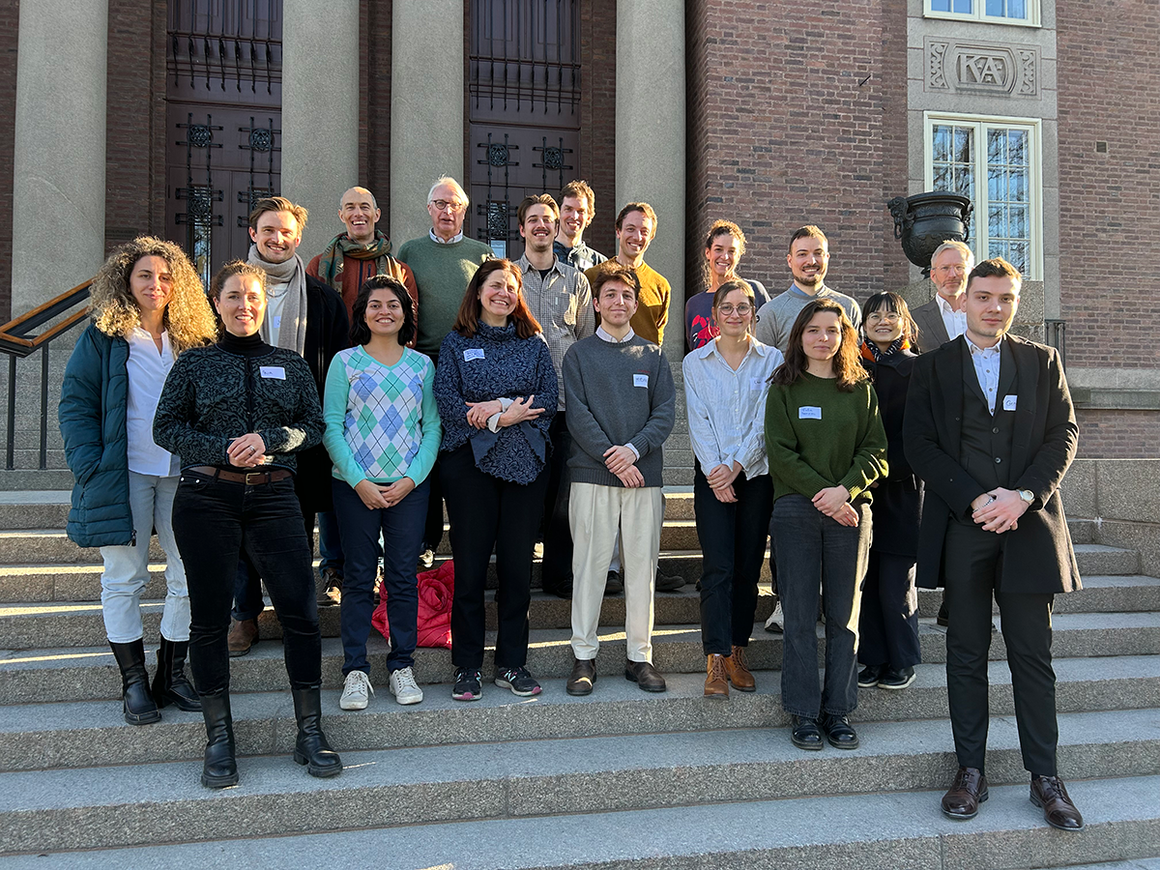 | |
|
|
In March, we hosted an invitation-only workshop on Anthropocene Diplomacy. Bringing together leading scholars and practitioners, the three-day event explored how interacting global crises — the polycrisis — are reshaping international cooperation on climate, biodiversity, oceans, pandemics, and pollution – and what might be robust strategies suited for this situation. Participants from Stockholm Resilience Centre, the Geneva Science and Diplomacy Anticipator (GESDA), the Science in Diplomacy lab and the World Benchmarking Alliance engaged in collective sensemaking across disciplines and practice perspectives. The workshop is a key milestone in the MISTRA-funded Anthropocene Navigator project (a collaboration between the Lab and the SRC), directly informing the development of the playbook and simulator — two tools designed to equip diplomats and sustainability actors with strategies for building effective coalitions in turbulent times. | |
|
|
| | Healing trauma in the Anthropocene | Engaging with Anthropocene Therapy |  | Photo: Sutirta Budiman/Unsplash | With anticipatory excitement for the spring, we are also preparing for a workshop that officially launches our work on Anthropocene Therapy. In collaboration with Stockholm Resilience Centre and the Global Resilience Partnership, we bring together scholars and practitioners that work with healing trauma, ecological emotions, and sustainability transformation from various disciplines and geographical contexts for two days in May. The workshop aims to explore: 1) the relationships between different forms of trauma and healing approaches; 2) the role of arts-based practices and human-nature relationships in individual and collective healing; and 3) how existing knowledge on healing can support individual and collective capacities to live in the Anthropocene. | |
|
|
| | Linnéa Sjöberg | Our first artist-in-residence | 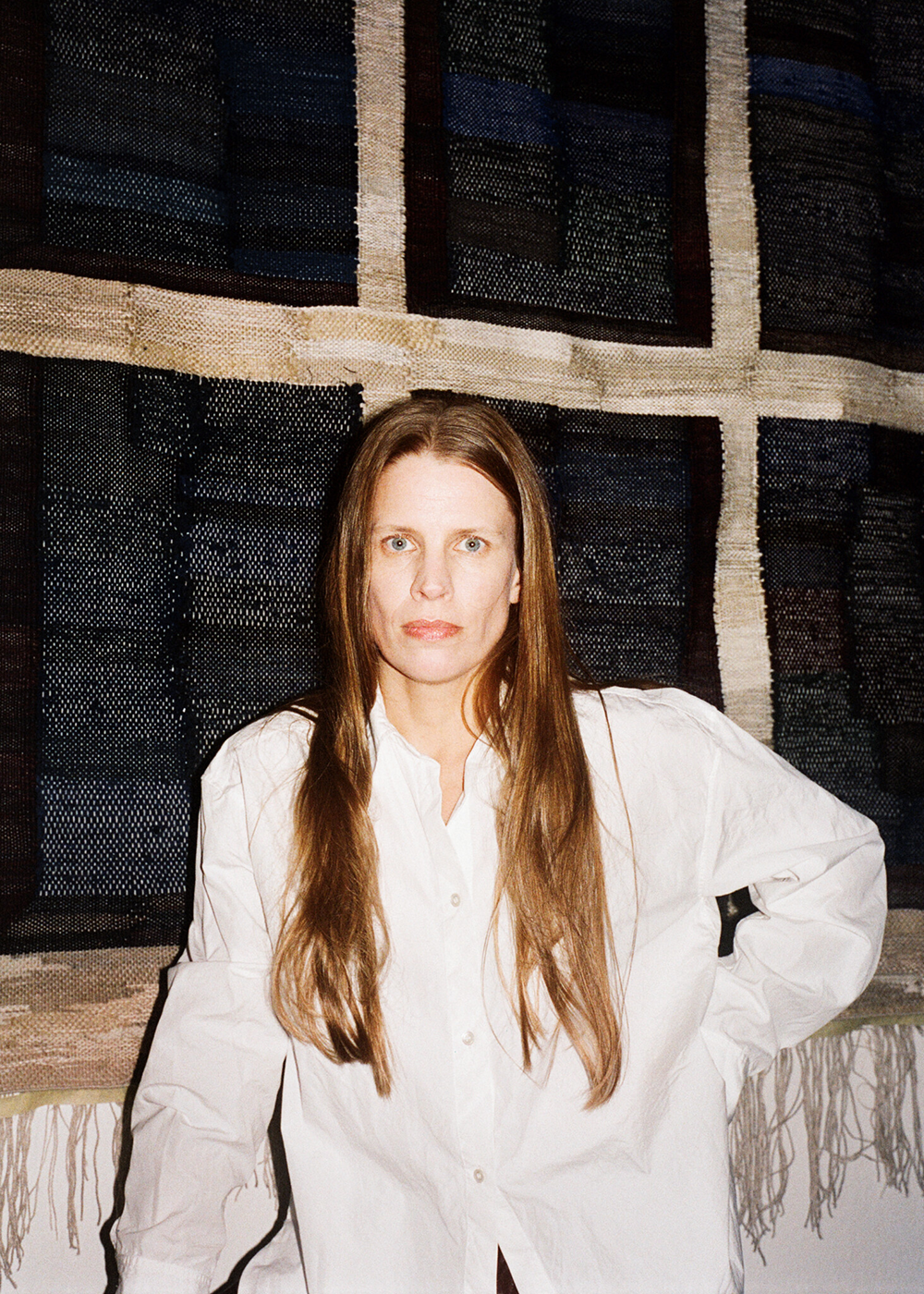 | | Since the start of the lab, we have been attempting to weave together methods and forms of expression that connects science, the arts and other forms of knowing. A first publication from the lab included observations from the Chilean Andes by artists and scientists. Since then, we have worked with artist duo Goldin+Senneby in collaboration with Accelerator (see more info here), with young arts students at the Beckman College of Design in Stockholm, with Norwegian artists Tone Bjordam, and we are presently exploring collaboration with Kristina Dutton, an American artist. We strive to develop long-term partnerships that stimulate mutual learning between science and art. We are excited to host Linnéa Sjöberg with us during the spring of 2026, as a first artist in residence. Linnéa will spend time with us, we will learn from her, and she will hopefully also learn something from us. This is a mutual exploration – there are interesting points of connections – and we will see where this takes us.
Linnéa Sjöberg was born in 1983 in Strömsund. Her artistic practice centres on identity, memory, and social structures and she holds a master’s degree from the Royal Institute of Art in Stockholm. Her current exhibition: ”Out of Character” is on display at Accelerator, until 14th of June. | |
|
|
| | Collaboration with Nobel Prize Museum | Dianty watching Dianty at Nobel Prize Museum | 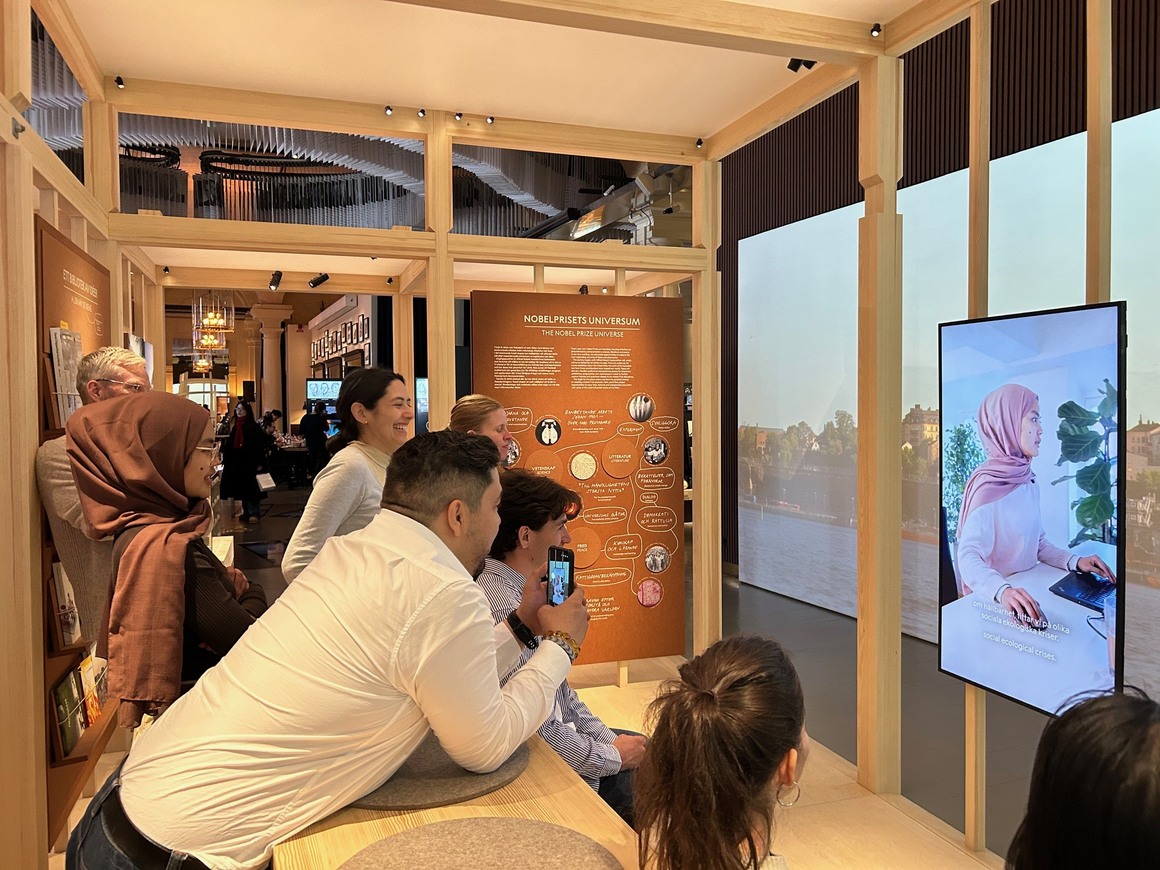 | | In 2031, our partner, the Nobel Prize Museum, is planning to move to a new building, the Nobel Center, a public space dedicated to science, literature, and peace, which will be built in Slussen, in downtown Stockholm. The new venue will not only expand their exhibition space, but will also include areas for programmes, an auditorium for lectures and symposia, and facilities for cultural events.
The Nobel Prize Museum and the Lab have held planning workshops for a new exhibition. As one of the collaborators in the Nobel Center project, our researcher Dianty Ningrum was featured in their Nobel Prize universe video series, where she reflects on her research topic of hope and the potential of the Nobel Center. | |
|
|
| | Joining the World Biodiversity Forum | The Anthropocene Laboratory at the World Biodiversity Forum | 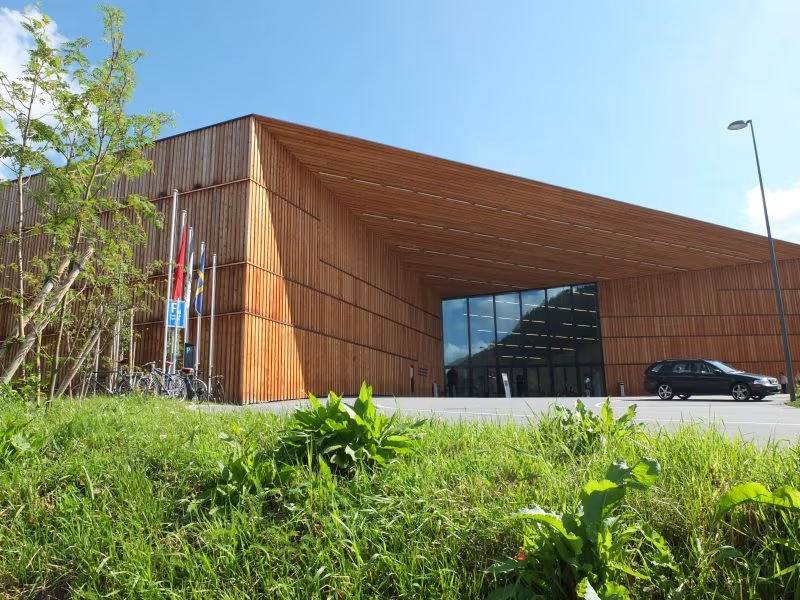 | Photo: Davos Congress Entrance A, Destination Davos Klosters | This year, the Anthropocene Laboratory will host a panel session titled ‘Hope: Documenting, tracing and understanding the diversity and global spread of collective actions for transformative change’, in collaboration with Craig Kauffman (University of Oregon) and Krushil Watene (University of Auckland). In this session and others, researchers at the lab (Dianty Ningrum, Caroline Schill and Rafa Calderón) will present recent work on Empirics of Hope and Transformative Change on Tuesday 16th June, 10:30-12:00. We look forward to engaging with scientists and practitioners at the Forum. | |
|
|
| | Team reaches full capacity | New research subjects are emerging | 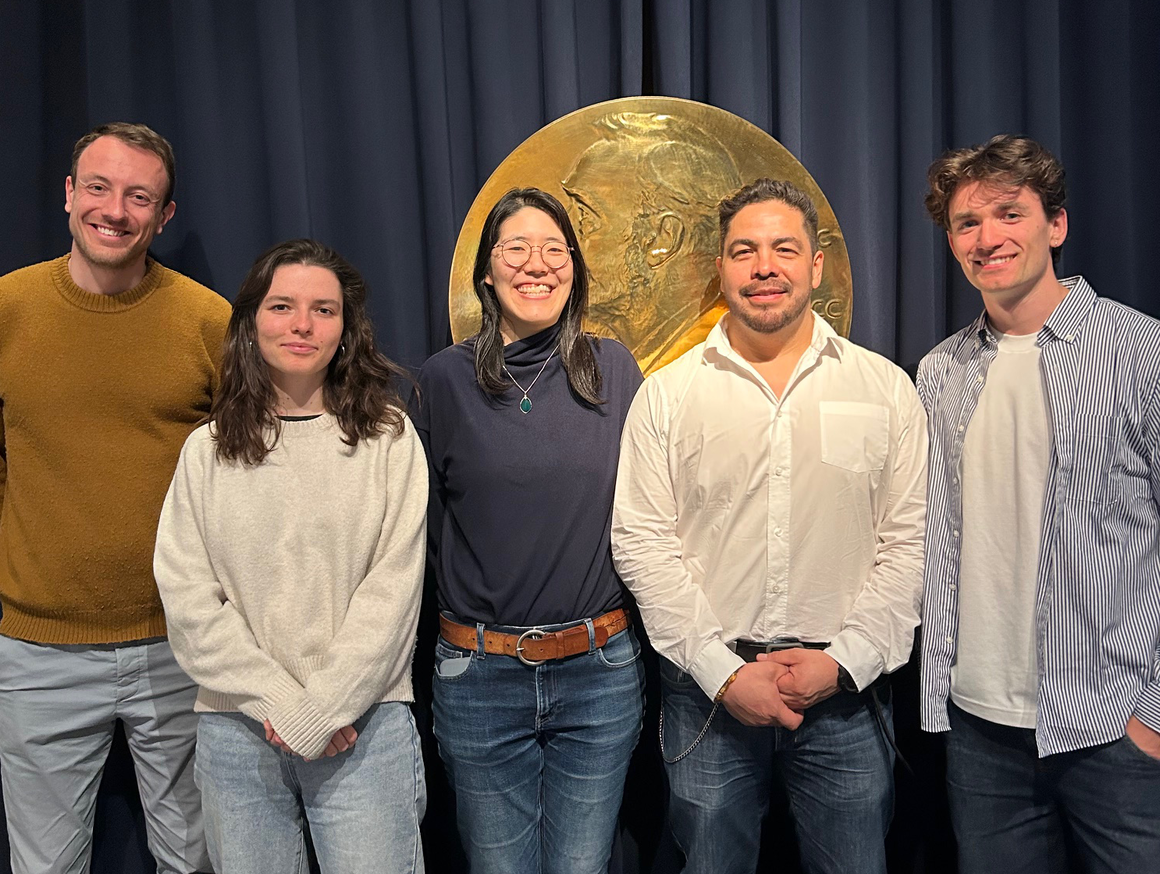 | | Since late November last year, our once half-empty office has welcomed new colleagues. Today, our team has doubled in size, and we now sit shoulder to shoulder at lunch and during team meetings. Thanks to the new members, we are even more active in engaging in discussions and learning from each other daily.
From left to right
Denis Karcher (Postdoc)
Julie Sampieri (Research Assistant)
Sachiko Ishihara (Postdoc)
Rafael Calderón-Contreras (Researcher)
Benjamin Loeffler (Research Assistant)
missing in the photo:
Louis Delannoy (Postdoc) | | Reflection of the first two years | Chelsea Kaandorp, Postdoc from 2023-2025 | 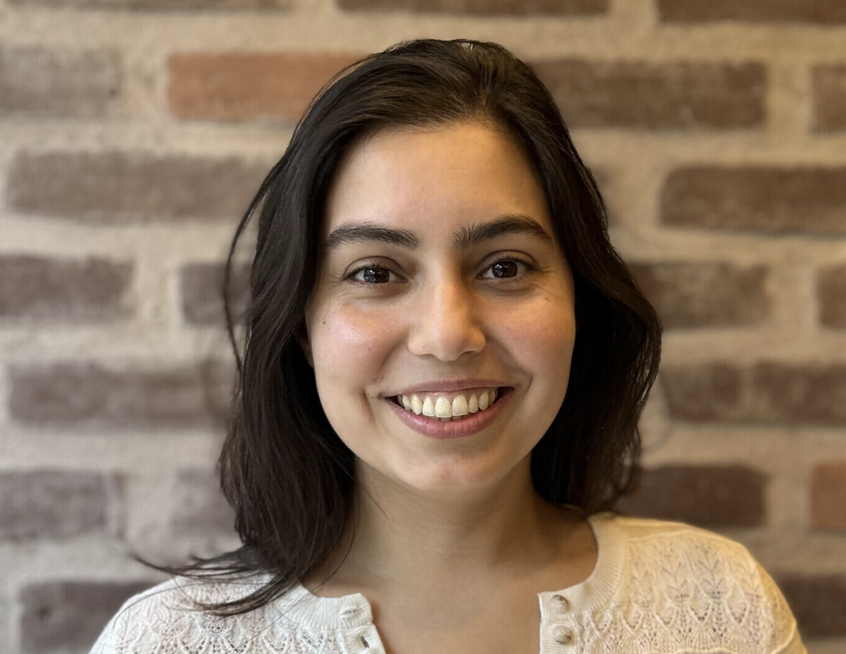 | | The Anthropocene Laboratory aims to nurture a generation of scholars who collaborate across disciplinary and geographic boundaries. Chelsea Kaandorp, a postdoc 2023-2025 reflects on her time with us: | | My experience was one of discovering and building connections. Earlier, I had been working on sustainability issues by trying to combine research methods from the social and natural sciences. During my time at the Lab, I primarily worked on the ‘Intertwined Biosphere’ theme. Focusing on embeddedness within the biosphere and adopting relational perspectives enabled me to engage with ways to go beyond mere integration, treating the entanglements of life as a starting point for inquiry.
What made my time at the Lab special was the collective way of working. The Lab is a beautiful space for deep thinking while fostering genuine exploration together —through daily exchanges with compassionate colleagues, collaboration with visiting researchers, and the organisation of international workshops and seminars. I always felt like I was part of a hub for sustainability science and action in Stockholm. I leave with deep gratitude for all these encounters and look forward to staying connected and continuing our explorations. | |
|
|
| | Testing I,II | Mountains, Meaning, and Testing I, II | 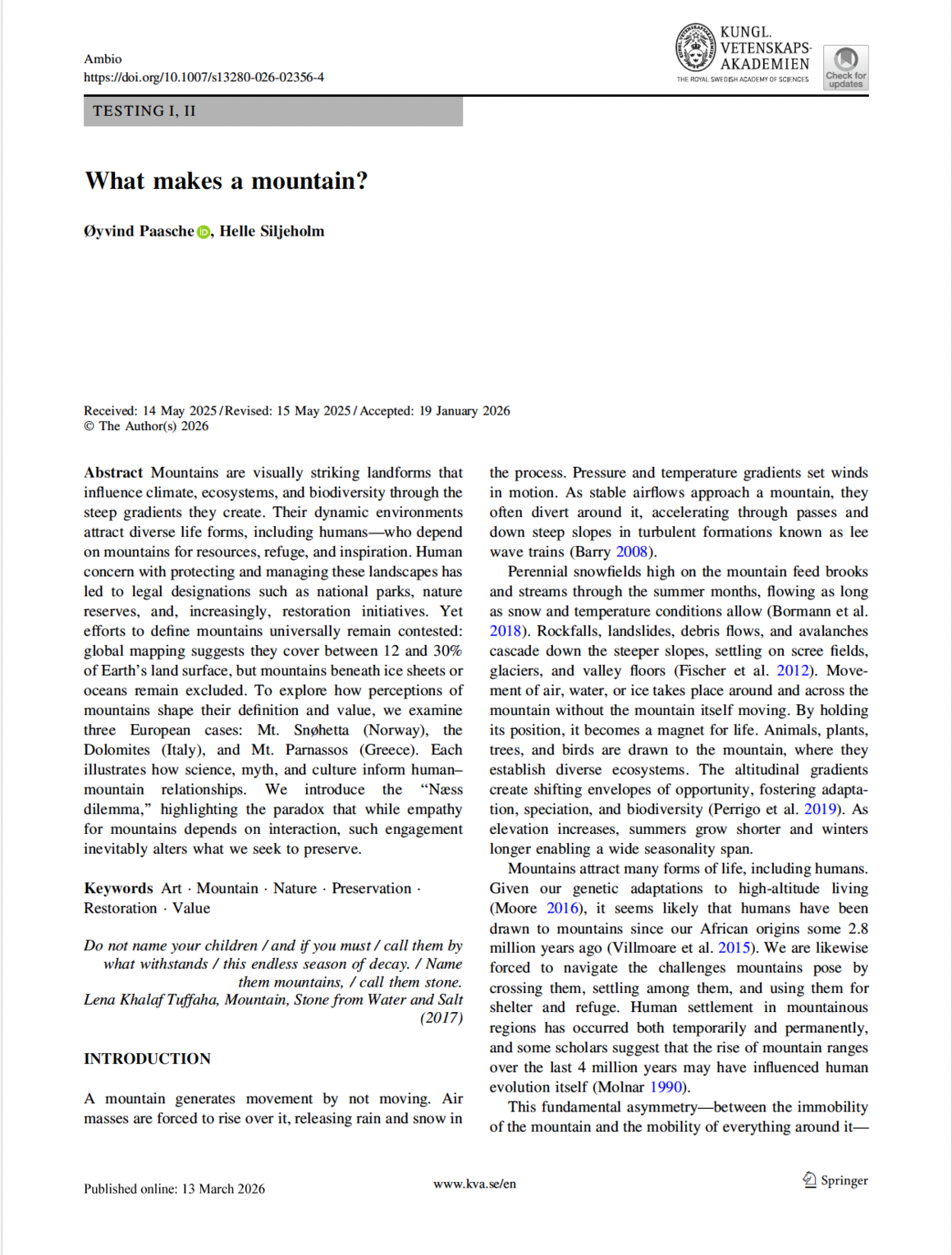 | | Testing I, II is a curated forum co-hosted by the Anthropocene Laboratory in Ambio at the Royal Swedish Academy of Science. The forum provides space for bold and collaborative experiments in how social-ecological knowledge is created, communicated, and put to work. It invites contributions where form is part of the thinking itself, bringing analytical rigor into conversation with imaginative practice across science, policy, education, culture, and lived experience. The section’s first published paper, What makes a mountain? by Øyvind Paasche and Helle Siljeholm, reflects this spirit by weaving together science, myth, and art to question how mountains are defined, valued, and protected. The section is now gathering momentum, with a rationale solidified, a paper published, another submitted, several in preparation, and an ambition to publish around ten contributions by the end of 2027. | | Annual Report 2025 released | "Ready for the next step" | 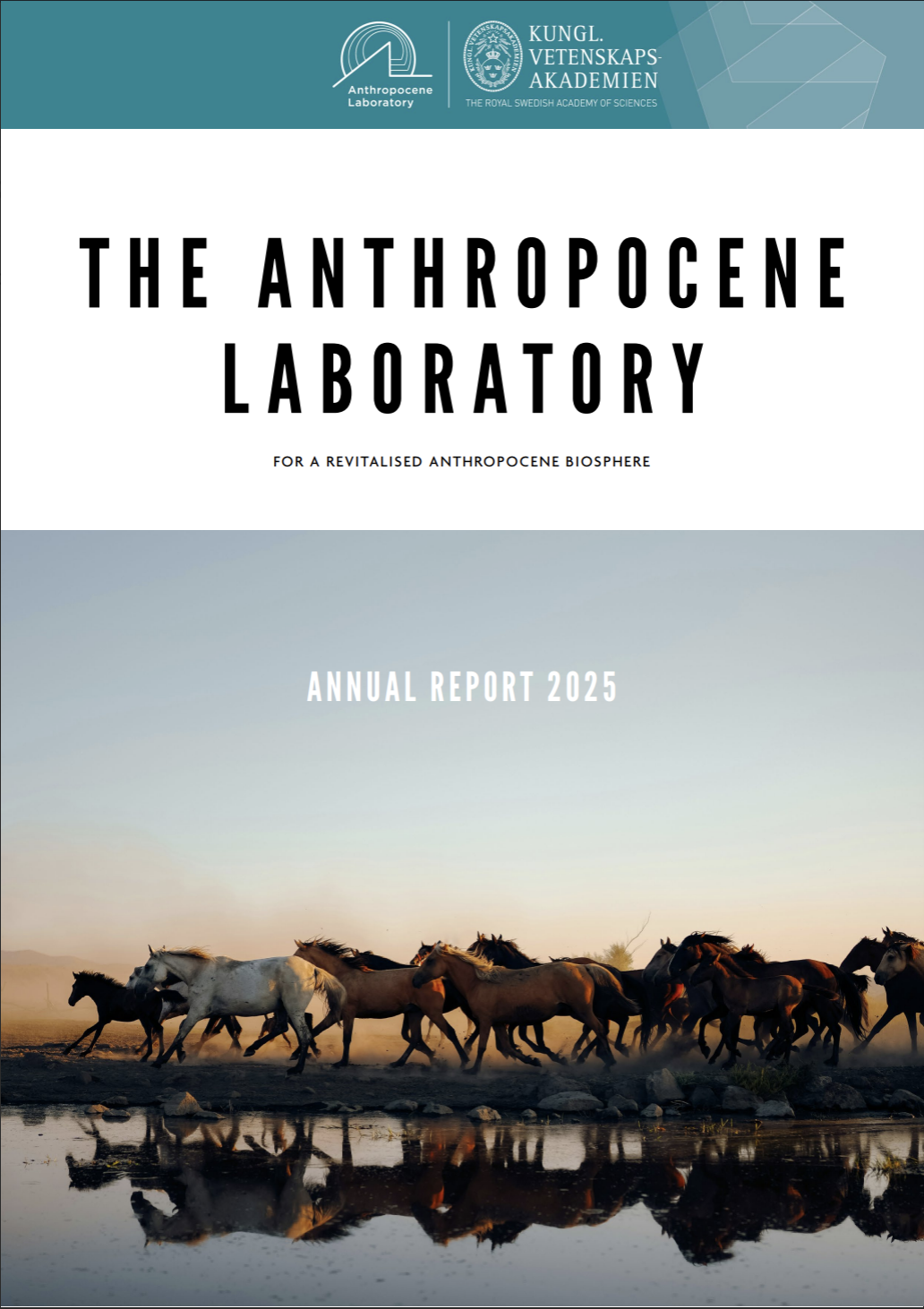 | | In February, our Annual Report 2025 was released.
The report shows updates on our activities, and a summary of what we have learnt to date, in terms of advancing knowledge and action in line with our vision.
For instance, during 2025, we celebrated the 25th anniversary of the popularization of the Anthropocene concept. With our partners, we hosted a public symposium at the Royal Swedish Academy of Sciences. | |
|
|
| About The Anthropocene Laboratory |  | | Vision
A revitalised anthropocene biosphere.
Mission
The mission of the Anthropocene Laboratory is to advance understandings of the intertwined biosphere, and to leverage this knowledge to identify and enable novel pathways towards a sustainable and just future. Through respectful dialogue and interdisciplinary collaboration, we explore creative approaches that integrate perspectives from the natural and social sciences, humanities, arts, and other fields of knowledge. Our aim is to catalyse positive change and inspire a future where our relationships with the living planet are revitalised.
Funders
The Anthropocene Laboratory is generously funded by two Swedish foundations, the Marianne and Marcus Wallenberg Foundation and the Marcus and Amalia Wallenberg Foundation.
Partners
We are proud to partner with Accelerator, The Centre for Anthropocene History at the KTH Royal Institute of Technology in Stockholm, The Max Planck Institute of Geoanthropology, The Nobel Prize Museum, The Beijer Institute of Ecological Economics, the Global Economic Dynamics and the Biosphere Academy Program (GEDB), the Stockholm Resilience Centre (SRC), artist Linnéa Sjöberg, and visual artist Tone Bjordam.
| | |
|
|
|
