| The Anthropocene Laboratory Newsletter | | | | |
|
|
Reflection on our first year | Henrik Österblom (Director) | 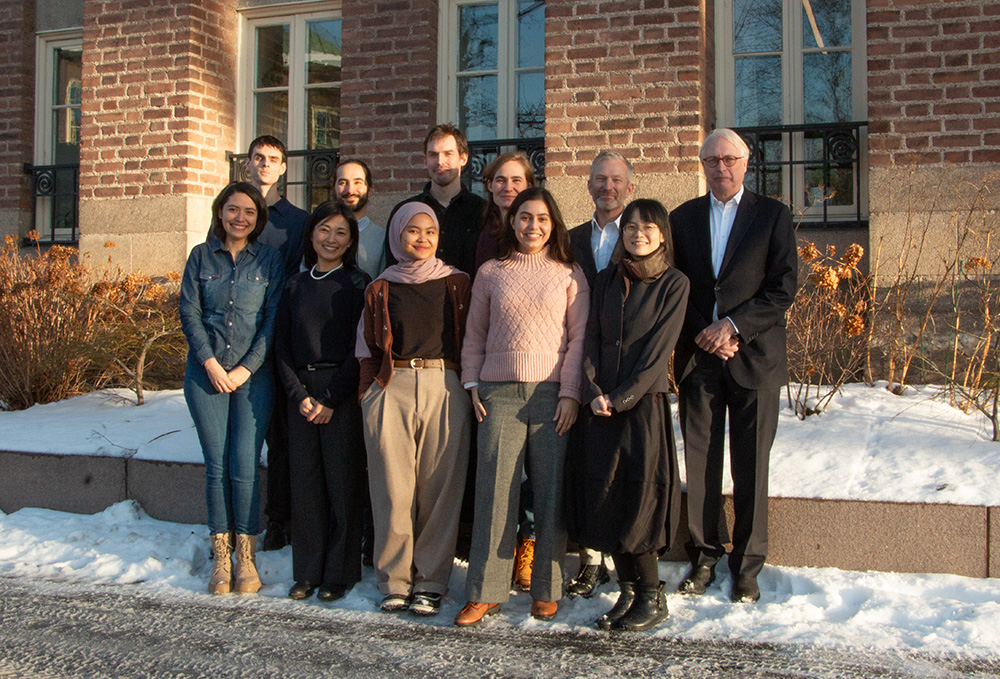 | | The Anthropocene Laboratory, with colleagues, plants, carpets, furniture, collaborators, activities, plans, and hopes, has been around for a year. This is formally the second year of our operations, but the first year was spent thinking about how to go about our business, why, with whom and with what method as a full team. By now, we have worked together for a full year, and are making progress – as individuals, as a group, and as an organisation. We are now up and running, with clear roles and responsibilities, have an exciting network of collaborators, are working with two exciting research tracks, are engaging in interesting collaboration with artists, and are developing exciting new ideas for public engagement with the Anthropocene challenges and opportunities. We have started working on our first annual report and are excited to tell you much more about what we have done – and what we strive to achieve. We have high ambitions, and feel privileged to have had all this time to reflect and to start slowly, steadily making progress towards our goals. As director, I could not imagine a more exciting and rewarding, difficult job, or better company to have alongside. | |
|
|
| | Empirics of Hope | Baltic Sea Festival | 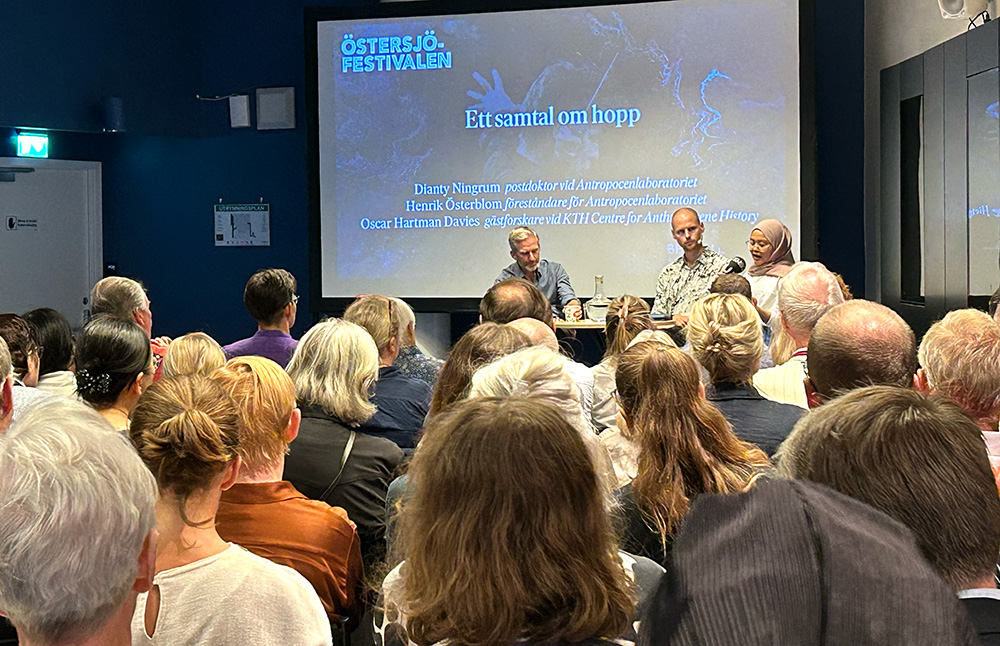 | |
|
|
This summer, the Anthropocene Laboratory collaborated with the Baltic Sea Festival, one of the leading classical music festivals in the region, to share and explore hope.
The themes of the festival this year were Dreams and Visions. In line with the spirit of the festival, three of the lab’s members: Dianty Ningrum (Postdoc), Henrik Österblom (Director), and Oscar Hartman Davies (Visiting researcher, current Postdoc at the Center of Excellence for Anthropocene History) brought together a dialogue on hope in the age of Anthropocene. The dialogue discussed three key questions: What does it mean to have hope in the age of Anthropocene? What are we doing (or trying to do) at the Anthropocene Laboratory with the research on hope and the collaboration we build around it? How can we find our roles in realising the future we are hoping for? It has been an exciting space to talk about hope with the concert goers, expressing what makes each of us feel hopeful while reflecting on things that were happening around us.
Aside from the science talk, the Lab-Festival collaboration led to the exhibition of Dream Kiosk—an interactive experience where people of all ages were invited to reflect on their future. The kiosk included a mirror cube where visitors could spend time in. It featured a set of hopeful and speculative questions about the future, with Arvo Pärt’s Spiegel im Spiegel playing in the background. The idea behind the Dream Kiosk was to invite people to spend time ‘reflecting’, with both the mirror and their thoughts, and to spend time with various emotions evoked inside them. Worry, fear, and hope can co-exist. | | Project’s Update
A lot of excitement at this stage in our project has come from the empirical work. We have been diligently collecting databases and reaching out to different researchers and organizations to work together with us in looking at the empirics of positive changes around the world. The overwhelming interest and positive responses we have received from these individuals and groups when discussing the project have been truly encouraging. Much is still left to do, and we are excited to continue the endeavor.
We are, for example, organising a mini data exploration workshop in October. During this time, scientists from around the globe will join strength with our team to analyse and unravel various sources of hope. We are excited about the potential insights and discoveries that this collaborative effort will bring. | | Seminar
The Anthropocene Laboratory is hosting a public seminar on “Law in the Anthropocene” on the afternoon of October 17th in the Royal Swedish Academy of Science’s Beijer hall. Some of the invited speakers are Prof. Craig M. Kauffman, the initiator of the Eco Jurisprudence Monitor Database, and Prof. Jonas Ebbesson, the Director of Stockholm Environmental Law and Policy Centre. Stay tuned for more information on additional speakers and the detailed agenda. | |
|
|
| | Intertwined Biosphere | 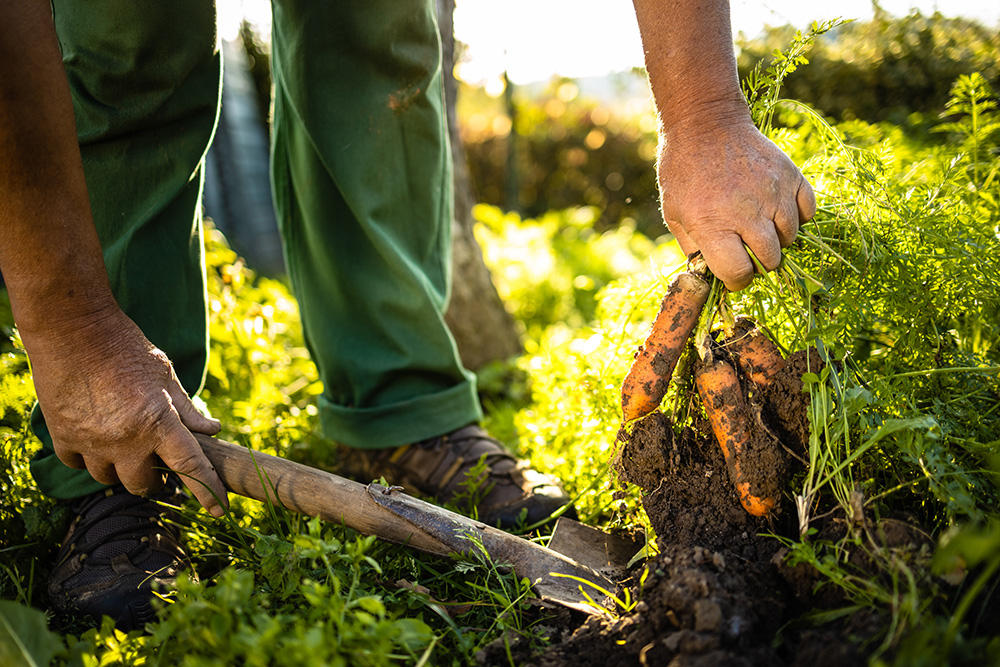 | | Research on the Intertwined Biosphere in Action
In May, 27 researchers and artists gathered for a workshop at the Royal Swedish Academy of Sciences, forming working groups to research the intertwined biosphere. Since then, the groups have had multiple meetings to shape concrete research projects. In the upcoming months, they will move forward with their work on the following academic publications:
- A perspective paper presenting promising avenues for conceptualising and researching the intertwined biosphere. This paper builds on the conversations in preparation for and during the prior two project workshops.
- A review paper setting the stage for a deeper understanding of how to engage with humanity’s embeddedness in the biosphere. This paper is based on several ways of knowing that recognise the inseparability of humans from the biosphere.
- A research paper on intertwined food systems. This paper looks to outline a novel conceptualisation of “regenerative governance” by exploring the gap between the knowledge of farmers engaged in and reporting the impacts of, regenerative agriculture, and the current EU monitoring and reporting system.
- A research paper demonstrating the intertwinedness of human life with ten basic chemical elements of planet Earth. For this paper, key elemental circulations are described and quantified regarding how they connect, and constitute, our bodies and the rest of the living world and Earth.
- An article reflecting on the role of spirituality and rituals in addressing sustainability challenges in the Anthropocene.
More information will follow - feel free to reach out if you have any questions or comments! | |
|
|
| |
- Gelves-Gomez, F., Davison, A. & Cooke, B. (2024) Relations of divergence and convergence. Political ontology at the intersection of protected areas and neoliberal conservation, Ecosystems and People, 20:1, 2390472, DOI: 10.1080/26395916.2024.2390472
- Keys, P., Collins, P.M., Chaplin-Kramer, R., Wang-Erlandsson, L. (2024) Atmospheric water recycling an essential feature of critical natural asset stewardship, Global Sustainability. 7, e2, 1–12.
- Lindahl, T., J. M. Anderies, A.-S. Crépin, K. Jónás, C. Schill, J. C. Cárdenas, C. Folke, G. J. Hofstede, M. A. Janssen, J.-D. Mathias, and S. Polasky. 2024. Titanic lessons for Spaceship Earth to account for human behavior in institutional design. npj Climate Action 3(1):56.
- Malhi, Y., G. C. Daily, I. Bateman, R. Bierbaum, S. Díaz, C. Folke, S. Polasky, and K. Willis (eds.). 2024. Bringing Nature into Decision-Making. Philosophical Transactions of the Royal Society B (1903).
- Wu, T., J. C. Rocha, K. Berry, T. Chaigneau, M. Hamann, E. Lindkvist, J. Qiu, C. Schill, A. Shepon, A.-S. Crépin, and C. Folke. 2024. Triple Bottom Line or Trilemma? Global Tradeoffs Between Prosperity, Inequality, and the Environment. World Development 178:106595.
- Davies, O. H., Turnbull, J., & Searle, A. (2024). Digital ecologies in practice. Cultural Geographies, 31(4), 509-517.
- Moore, ML., Wang-Erlandsson, L., Bodin, Ö. et al., (2024) Moving from fit to fitness for governing water in the Anthropocene. Nature Water, 2, 511–520.
- Posada-Marin, J.A., Salazar, J.F., Rulli, M.C., Wang-Erlandsson, L., Jaramillo, F. (2024) Upwind moisture supply increases risk to water security. Nature Water.
| |  | Photo: Unsplash/United States Geological Survey |
|
|
| | Our first collaboration with artists | The Stockholm-based artist duo Goldin + Senneby has been working on a special sketch for us, in a collaboration facilitated by, and in partnership with, Accelerator at Stockholm University. Through their participation in our workshops and interviews with our staff, they have developed a theme that engages with the Anthropocene, Intertwined Biosphere and Empirics of Hope. In our next newsletter, we will share more details about the forthcoming sketch, and how it will be translated to an arts exhibition in the near future. Below is a comment from Goldin + Senneby.
"Our work together with Anthropocene Laboratory has inspired us to rethink embeddedness within the biosphere and revisit the art historical construction of landscape, through painting. It is a true pleaser to engage with the lab's rich network of scientists and thinkers from around the world." | |
|
|
| Visiting other institutes | The Max Planck Institute of Geoanthropology | 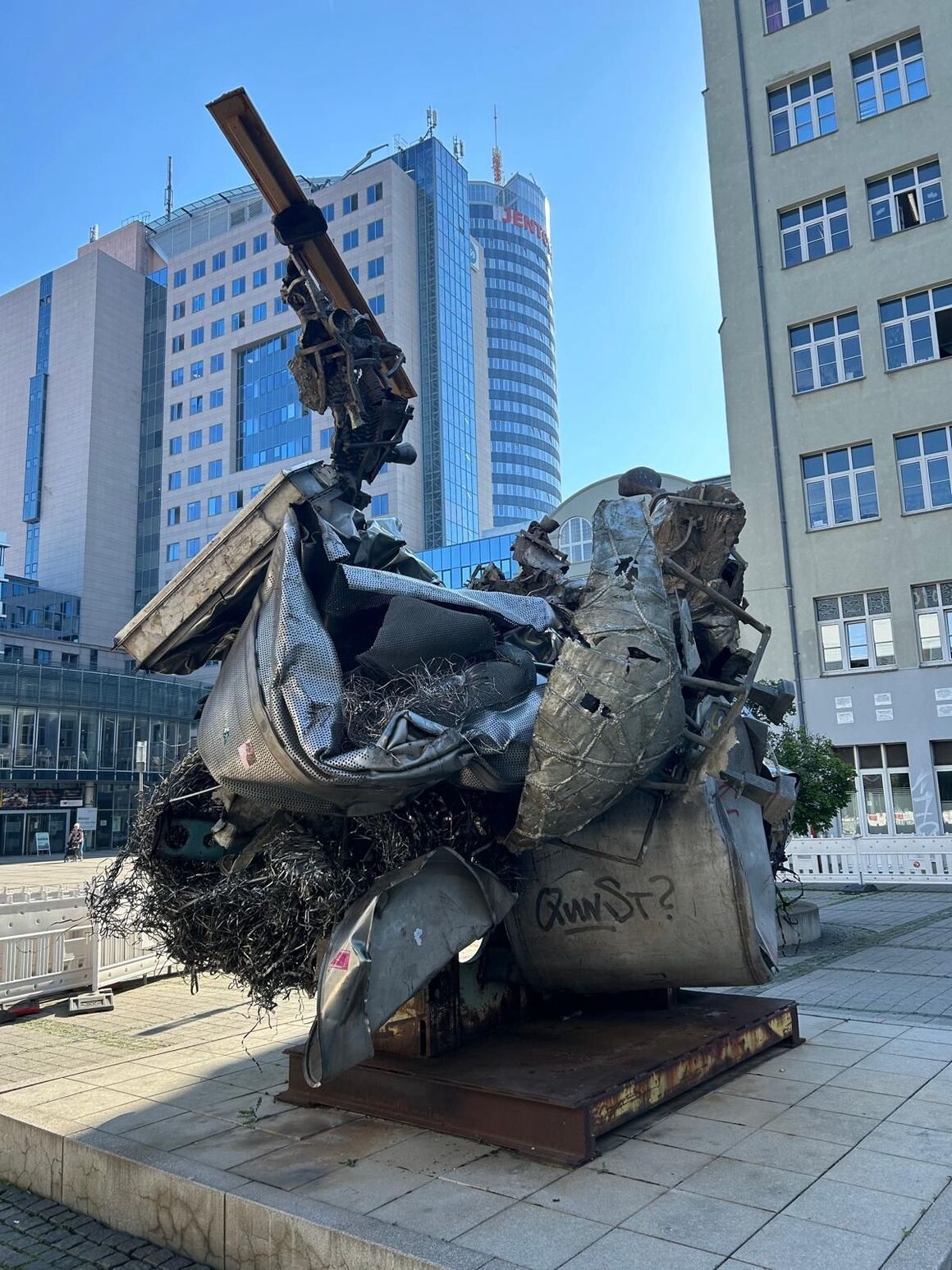 | | 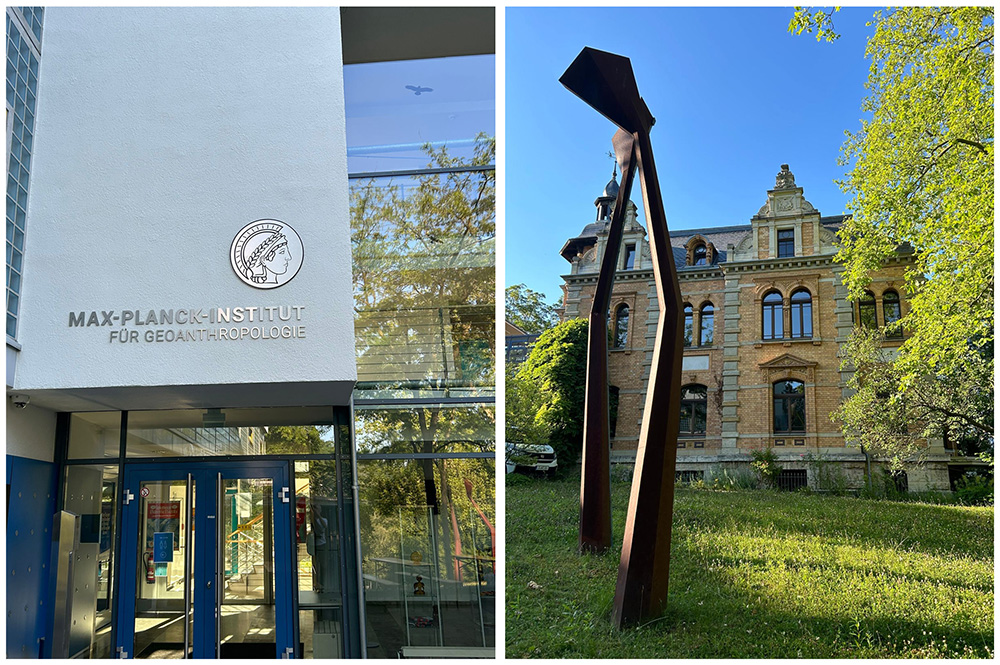 | Start typing something... | On June 24-26, The Max Planck Institute of Geoanthropology hosted the scientific conference: The Anthropocene: addressing its challenges for humanity – crossing the boundaries of science in Jena (Germany) co-organised with Leopoldina, the German National Academy of Sciences. Peter Søgaard Jørgensen and Henrik Österblom from the Anthropocene Laboratory were invited as speakers, and the conference included many opportunities to connect with old and new colleagues and collaborators. Many synergies will be possible between this new Max Planck institute, and the Anthropocene Laboratory. Future joint activities are already being planned. | | 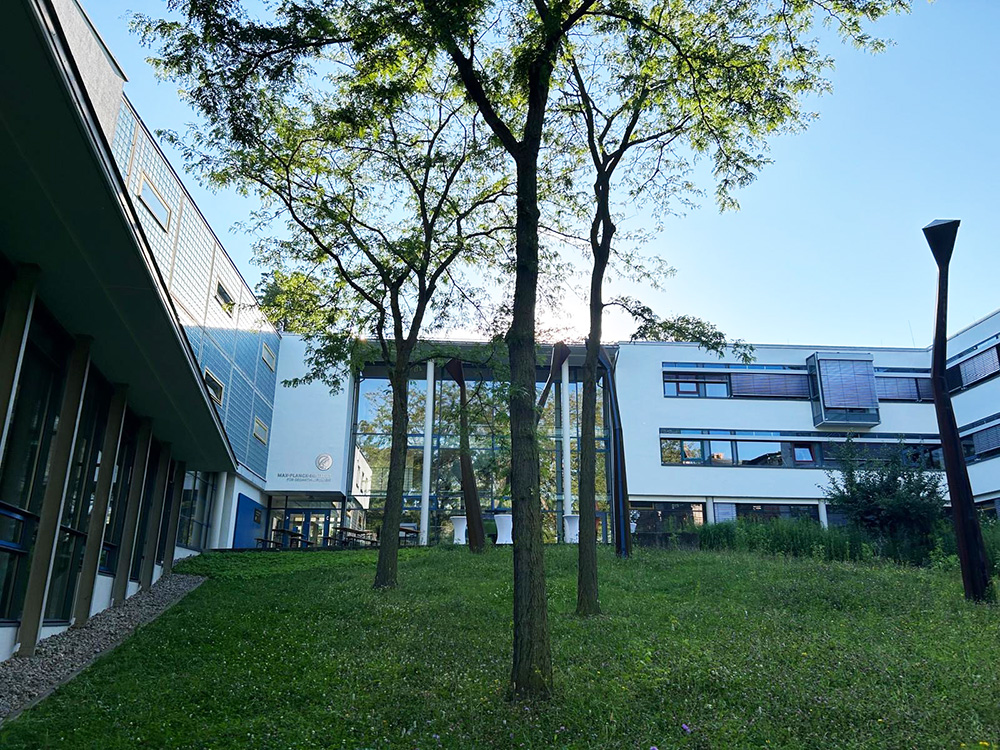 | | |
|
|
| Message from our Scientific Committee Member | Reflecting our one-year anniversary, we invited Marten Scheffer, one of our esteemed Scientific Committee members, to share a special message with us.
The other day a colleague told me that their ten-year-old son had stopped doing homework. It turned out he had understood that climate change had made any preparation for the future futile. So why waste time on things like schooling? Maybe the boy had picked up too much from his scientist parents. In any case he is not alone in giving up because of climate depression. The lab wants to help solve that issue, and I am proud to be part of the advisory committee. Last week I spoke long to Dianty and was impressed by the great work going on. Depressed people have little memory for moments in their lives when they had agency. Bringing such memories back, helps getting them out of their depression. The lab is aiming to do just that. Happy to help whenever I can.
Marten Scheffer | 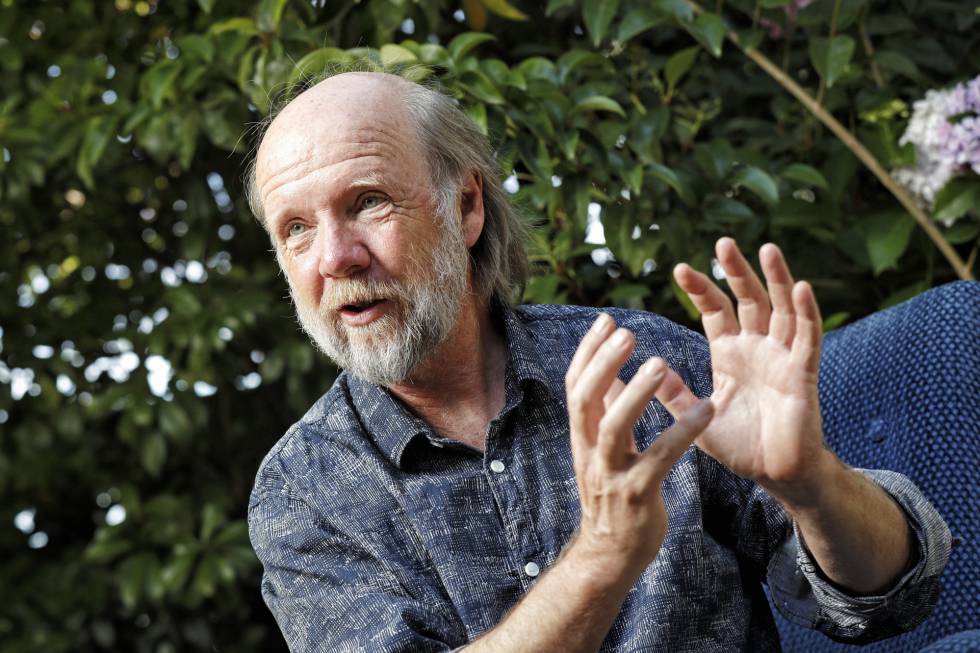 | |
|
|
| About The Anthropocene Laboratory |  | | Vision
A revitalised anthropocene biosphere.
Mission
The mission of the Anthropocene Laboratory is to advance understandings of the intertwined biosphere, and to leverage this knowledge to identify and enable novel pathways towards a sustainable and just future. Through respectful dialogue and interdisciplinary collaboration, we explore creative approaches that integrate perspectives from the natural and social sciences, humanities, arts, and other fields of knowledge. Our aim is to catalyse positive change and inspire a future where our relationships with the living planet are revitalised.
Funders
The Anthropocene Laboratory is generously funded by two Swedish foundations, the Marianne and Marcus Wallenberg Foundation and the Marcus and Amalia Wallenberg Foundation.
Partners
The Beijer Institute of Ecological Economics and the Global Economic Dynamics and the Biosphere Academy Program (GEDB), both at the Royal Swedish Academy of Sciences, and the Stockholm Resilience Centre (SRC) of Stockholm University, have been instrumental in forming and developing the international frontier of science for sustainability. These organisations are critical assets for the Anthropocene Laboratory and have decades of experience in performing scientific work that combines skills and competencies across disciplines as well as science for change. These are the home institutions for the Anthropocene Laboratory mentors.
The Anthropocene Laboratory strives to work across scientific disciplines and in collaboration between science and art. We are happy to have partnered with Norwegian visual artist Tone Bjordam, Stockholm-based Accelerator and Goldin + Senneby, and Accelerator the exhibition space in Stockholm University where art, science and societal issues meet. | |
|
|
|
